
So, you’ve built a website, poured in time and maybe some cash, but the leads just aren’t rolling in. It’s a common frustration, and honestly, it can feel like shouting into the void. You’re probably wondering, ‘Why my website is not getting leads?’ It’s not always about more traffic; it’s about the *right* traffic and making sure your site actually works for you. Let’s unpack why your digital storefront might be a bit too quiet and what you can do about it.
Key Takeaways
- Your website’s first impression happens in about 3 seconds. If it’s slow, confusing, or looks unprofessional, visitors will leave.
- Be super clear about who you help and what problems you solve. Visitors need to know instantly if they’re in the right place.
- Website speed and mobile-friendliness are critical. Slow sites lose more than half of their potential visitors.
- Build trust with real testimonials and case studies. Design matters, but so does proving you’re credible.
- Always give visitors a clear next step (a call-to-action) so they know how to connect with you.
Is Your Website Failing To Attract The Right Leads?
So, your website isn’t bringing in the kind of clients you want. It’s a common problem, and honestly, it’s frustrating. You pour time and maybe even money into your online presence, only to get inquiries that are a complete mismatch. It feels like you’re shouting into the void, right? The truth is, your website might be sending out the wrong signals, or worse, no signal at all to the people who actually need what you offer.
Understanding The Goal: Quality Over Quantity
Let’s get one thing straight: more leads isn’t always better. Think about it. Fifty inquiries from people who aren’t a good fit can be way more draining than ten solid leads who are genuinely interested and likely to become customers. High-quality leads convert faster, engage more deeply, and are more likely to refer others. They’re the ones who stick around. The goal here is to attract the right people, not just any people. It’s about making your website a magnet for your ideal client, not a general advertisement for everyone.
The Power Of Specificity In Messaging
This is where being specific really shines. If your website copy is vague, trying to appeal to everyone, it ends up appealing to no one. When you clearly state who you help and what specific problems you solve exceptionally well, the right people will recognize themselves. They’ll feel understood. This specificity acts like a filter. Those who aren’t a good fit will naturally move on, saving you time and effort. It might feel like you’re narrowing your audience, but in reality, you’re just cleaning up the signal so the right message gets through loud and clear. This approach helps refine your website’s communication to attract higher-quality clients.
Reducing Noise For A Cleaner Signal
Imagine trying to listen to your favorite song in a really loud room. It’s tough, right? Your website can be like that if it’s cluttered with jargon, unclear calls to action, or a general lack of focus. We need to cut through that noise. This means being crystal clear about your services, who benefits most, and what the next step is for a visitor. It’s about making sure that when someone lands on your page, they immediately understand if you’re the solution they’ve been looking for. A focused message makes it easier for potential clients to connect with you and move forward. It’s about making your website a welcoming space that transforms visitors into leads.
A website that’s too general or unclear is like a shop with a sign that just says "Stuff." People walk by because they don’t know if you have what they need. Being specific isn’t about excluding people; it’s about attracting the right people by being clear about your unique value.
The Critical First Impression: Your Website’s Three-Second Showdown
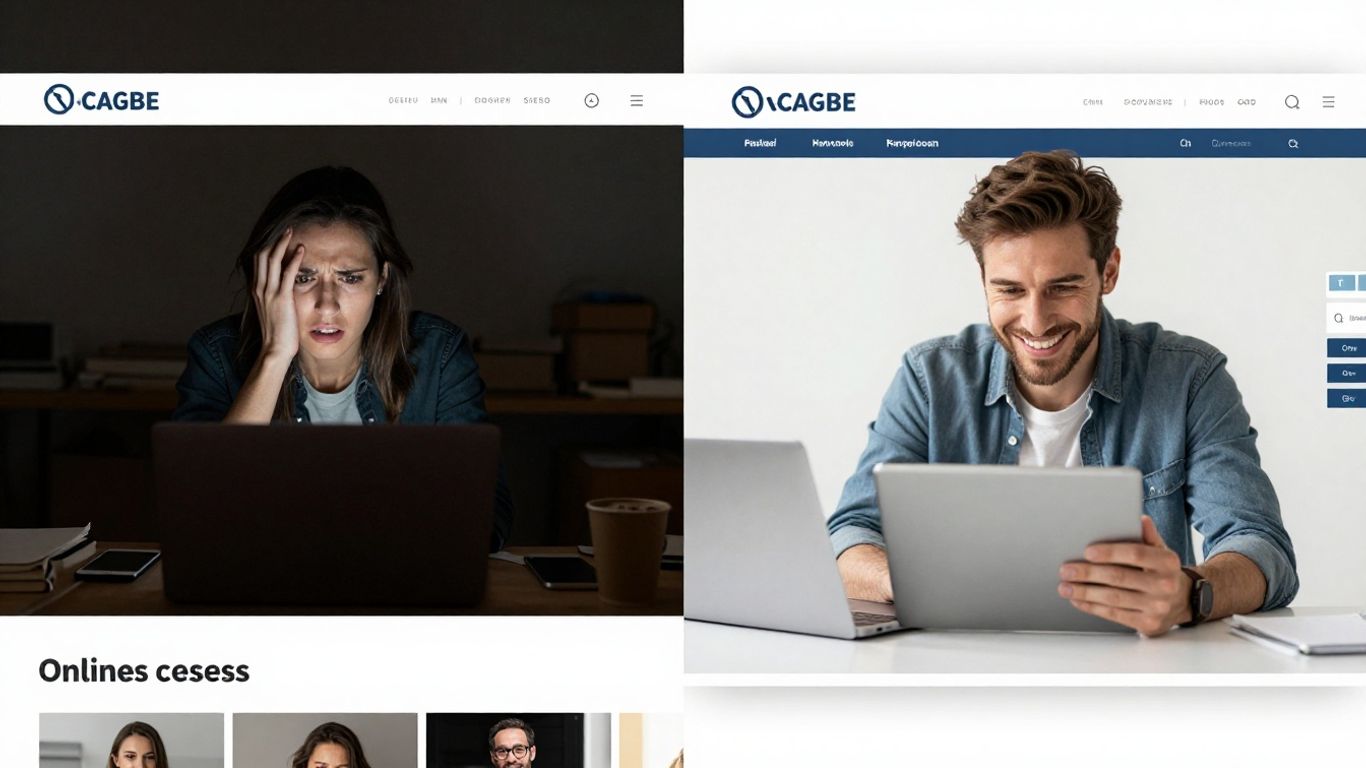
So, you’ve got a website. That’s a start. But here’s the hard truth: when someone lands on your digital doorstep, you’ve got about as long as it takes to blink to make them stick around. We’re talking three seconds, maybe four if you’re lucky. In that tiny window, a visitor is already forming an opinion. They’re asking themselves: "Who are you?", "What do you do?", and most importantly, "Should I even be here?" If those answers aren’t crystal clear within those first few seconds, they’re hitting the back button faster than you can say "lead generation." It’s a brutal reality, but your website’s first impression is almost entirely visual and speed-based. You have only 3 seconds to capture a lead on your website.
Answering The Essential Visitor Questions Instantly
That precious space above the fold – the part of your website people see before they even think about scrolling – is your digital handshake. It sets the entire tone. Most professional service websites totally miss the mark here. You need to instantly answer the three most important questions a visitor has:
- Who are you? (Are you the right person for my problem?)
- What do you do? (How do you solve my problem?)
- What should I do next? (What’s the easiest way to get started?)
If your site makes them work for these answers, they’re gone. Studies show people decide if they like your site in about 50 milliseconds, but the real decision to stay or leave happens within those first three seconds. Get this wrong, and you’re basically handing potential clients to your competitors. Forget the vague corporate speak; people care about their problem and how you can fix it.
Why Speed Is Non-Negotiable For Lead Generation
Let’s talk about speed. It’s not just a nice-to-have; it’s the gatekeeper of your entire online presence. Imagine a potential client searching for your services late at night, stressed and needing answers. They click your link, expecting immediate help, but instead, they’re met with a spinning wheel. According to Google, a whopping 53% of mobile users will ditch a site if it takes longer than three seconds to load. That’s more than half of your potential business, gone. Poof. It’s like having a physical storefront with a faulty door that takes ages to open – people just walk away. A slow site screams “amateur” and “unreliable,” and nobody wants that. The numbers for slow websites are pretty grim:
| Metric | Impact |
|---|---|
| 3-second load time delay | 40% of visitors leave |
| Bad experience | 88% won’t return |
| Website design impression | 75% judge credibility based on design |
If your website isn’t fast and clear from the get-go, you’re essentially leaving money on the table. It’s like having a salesperson who’s too slow to even greet a customer; they’re not going to close any deals.
The Impact Of Design On Credibility
People decide if they like you, trust you, and want to do business with you within the first three seconds. If your professional service website isn’t making a strong, clear impression right away, you’re likely losing potential clients before they even get a chance to see what you offer. This isn’t about fancy tricks; it’s about getting the basics right to stop visitors from hitting that back button. Think of your website as your virtual storefront. If it’s dusty, confusing, or takes forever to open, people aren’t coming in. They’re heading next door. A snappy, clear, and trustworthy site isn’t just about looking good; it’s about making bank. Effective website design is crucial for making a positive and lasting first impression.
Getting people to stick around is the first hurdle. The next is convincing them you’re the real deal. This is where trust signals come in. Forget those cheesy stock photos; use real pictures of your team, your work, or your office. Testimonials from actual clients? Gold. Case studies showing how you solved a problem? Even better. People want proof.
Here’s a quick checklist to boost that trust factor:
- Real Testimonials: Get quotes from happy clients. Video is even better if you can swing it.
- Case Studies: Detail a problem, your solution, and the results. Quantify it if possible.
- Awards & Affiliations: Display any relevant badges or certifications. They’re instant credibility boosters.
Making it ridiculously easy for people to reach you is also key.
Unpacking The Speed Demons: What’s Slowing Your Site Down?
So, your website looks pretty, but does it actually load quickly? If your site is taking its sweet time to load, you’re basically handing potential clients over to the competition. We’re talking about the kind of slowness that makes people tap their feet, check their watches, and then, with a sigh, hit that back button. It’s a real bummer, and honestly, it’s happening more often than you think.
Image Bloat: The Culprit Behind Slow Loads
Let’s be real, nobody wants to see a pixelated mess, but those gorgeous, high-resolution photos you just uploaded? They might be the reason your site feels like it’s wading through molasses. Think about it: a single image straight from your camera can be several megabytes. Now imagine a few of those on one page. Suddenly, you’re looking at load times that would make a sloth yawn. Optimizing your images is non-negotiable. It’s like trimming the fat so your website can actually run.
Here’s a quick look at how image size impacts load time:
| Image Size | Estimated Load Time |
|---|---|
| 5MB | 10+ seconds |
| 1MB | 2-4 seconds |
| 300KB | Under 1 second |
Caching and Scripts: The Unseen Performance Killers
Beyond the obvious image offenders, there are the sneaky speed vampires: caching and scripts. Caching is like a website’s memory; it stores bits of your site so it doesn’t have to rebuild everything from scratch every single time someone visits. If it’s not set up right, or not set up at all, your site has to do all the heavy lifting, every single time. Then there are plugins and scripts. While they add cool features, too many, or poorly coded ones, can bog down your site like a bad dial-up connection. It’s a delicate balance between functionality and speed. You’re not just building a website; you’re building a digital storefront. If the doors are locked for too long, people will just go next door. Improving your website speed is key.
A slow site isn’t just annoying; it’s costing you business, plain and simple. If you’re serious about your online presence, you need to ensure your website speed is top-notch.
Hosting Horrors: Is Your Provider Holding You Back?
Sometimes, the problem isn’t even on your website, but under it. We’re talking about your hosting. Those super cheap, bargain-basement hosting plans? They often cram way too many websites onto one server. When one of those sites gets a traffic surge, guess what? Your site slows to a crawl too. It’s like being stuck in traffic because someone else decided to have a parade. Investing in quality hosting is like getting a dedicated lane for your business; it’s worth every penny to avoid those frustrating delays and keep your site zippy. A slow site screams “amateur” and “unreliable,” and nobody wants that. This is why having a visually appealing site is only half the battle. You need to make sure your website visuals are not only attractive but also load quickly. It’s a package deal, and if one part is broken, the whole thing falls apart. You can get help with technical optimizations to improve performance.
Clarity Is King: Communicating Your Value Proposition Effectively
Your website is supposed to be working for you, right? Not just sitting there looking pretty, but actually pulling in people who need what you do. But if your message is all over the place, people will just leave. It’s like trying to have a conversation with someone who keeps changing the subject – nobody knows what’s going on.
Defining Who You Help And What You Solve
This is where most professional services websites stumble. They talk about their amazing skills or their fancy processes, but they forget to say who they actually help and what problem they fix. Think about it: someone lands on your site because they have a headache. They don’t want a lecture on the history of aspirin; they want to know if you have the pill that will make the pain stop. Your website needs to answer these two questions in the first few seconds: Who are you for, and what specific problem do you solve for them? If this isn’t crystal clear, they’re gone.
- Who is your ideal client? Be specific. Not just ‘businesses,’ but ‘small e-commerce stores struggling with inventory management.’
- What is the main outcome you deliver? What’s the tangible result? ‘We help you cut shipping costs by 15%’ is way better than ‘We offer logistics solutions.’
- Why should they choose you? What makes you different from the next guy?
If your website copy sounds like it could apply to anyone, it probably applies to no one. You need to speak directly to the person you want to attract. It’s about making them feel seen and understood. This is a big part of crafting a compelling value proposition for your consulting website [fb6e].
Translating Jargon Into Customer Wins
Nobody wants to read a dictionary on your website. If you’re using terms that only people in your industry understand, you’re basically putting up a brick wall. Your potential clients aren’t looking to be impressed by your vocabulary; they’re looking for solutions. They have a pain point, and they need to know, in plain English, how you can make their life easier or their business better.
Here’s a quick way to check if you’re speaking gibberish:
- Read your copy aloud: Have someone outside your field listen. If they look confused, you’ve got a problem.
- Highlight the jargon: Go through your site and highlight every word that isn’t common knowledge. If you highlight more than a handful, it’s time for a rewrite.
- Focus on benefits, not features: Instead of saying ‘We utilize a proprietary AI-driven analytics platform,’ try ‘We help you understand your customers better so you can sell more.’
People don’t care about your internal processes or your fancy tools until they understand how those things directly benefit them. Translate everything into the language of their problems and your solutions.
The Primary Call-To-Action: Your Next Step
Once you’ve got their attention and they understand what you do, what’s next? You can’t have a million options. People get overwhelmed and just leave. Your website needs one clear, obvious next step. This isn’t about listing every service you offer in the navigation menu. It’s about guiding the visitor toward the action that makes sense for them and for you.
- Book a consultation: If you want to talk to them directly.
- Download a resource: If they’re not ready to talk but you want to capture their info.
- Start a conversation: A simple contact form or chat option.
Every page on your site should subtly (or not so subtly) point towards this primary action. If you’re trying to get people to buy something, you need to make it ridiculously easy for them to take that next step. This is how you build a pipeline of warm prospects instead of waiting for cold inbound leads. It’s about making the path forward clear and simple, which is a key part of crafting a compelling value proposition that fuels business expansion [c576].
Beyond The Bounce: Fixing Your Professional Service Website
So, your website is up and running, but people are leaving faster than free donuts at a morning meeting. It’s like having a beautiful storefront with a broken door – people see it, but they can’t get in. For professional services, this is a huge problem. You’ve got expertise, you’ve got results, but if your website isn’t making it easy for people to connect with you, all that good stuff is going to waste.
Making It Ridiculously Easy For People To Reach You
Think about it: when someone lands on your site, they’re usually looking for a solution to a problem. They don’t want to play detective. Your contact information shouldn’t be hidden in a digital maze. It needs to be front and center, obvious, and accessible from pretty much anywhere on your site. This means having clear contact details, maybe a prominent phone number, and a simple contact form that doesn’t ask for their life story.
- Phone Number: Make it clickable on mobile devices.
- Contact Form: Keep it short – name, email, and a message box are usually enough.
- Location: If you have a physical office, show it on a map.
If your website makes visitors work too hard to find out how to get in touch, they’ll assume you’re not easy to work with. And that’s a quick way to lose business.
Ensuring Your Website Is A Welcome Mat, Not A Speed Bump
We’ve all been there – clicking on a link and waiting… and waiting… for a page to load. It’s incredibly frustrating. For professional services, a slow website is like a speed bump that sends potential clients bouncing right back to the search results. In the first few seconds, visitors are deciding if they’re in the right place and if they can trust you. If your site is sluggish or confusing, they’ll assume you can’t solve their problem effectively. This is why improving your website’s speed is so important.
Here’s a quick check:
- Load Time: Aim for under 3 seconds. Use tools to test this.
- Mobile Friendliness: Most people browse on their phones. Does your site look and work well on a small screen?
- Clear Messaging: Can someone understand what you do and who you help within 5 seconds of landing on your homepage?
Building Trust With Testimonials And Case Studies
People buy from people they trust. For professional services, trust is everything. Your website needs to show, not just tell, that you’re good at what you do. This is where testimonials and case studies shine. Real stories from real clients are incredibly powerful. They provide social proof and demonstrate the tangible results you deliver. Don’t just list them; make them easy to find and digest. A well-placed testimonial can be the difference between a visitor leaving and them picking up the phone to inquire about your services.
The Lead Volume Trap: When More Isn’t Better
So, you’ve been pushing hard on marketing, and the numbers look great. Website traffic is up, inquiries are flooding in, and your reports are showing a serious increase in leads. Sounds like a win, right? Well, not so fast. Sometimes, chasing sheer numbers can actually hurt your business more than it helps. It’s like filling a bucket with a hole in it – you’re putting in a lot of effort, but not much is staying.
Increased Inquiries But Flat Conversion Rates
This is a big one. You’re getting more people to raise their hand, but when your sales team looks at those leads, too many aren’t a good fit. Or worse, the qualified leads you do get aren’t converting into actual customers like they used to. You’re working harder, spending more, but the bottom line isn’t budging. This often happens when your lead generation tactics focus too much on broad appeal. Think general ads or content that tries to speak to everyone. While this might bring in a lot of people, it also brings in a lot of people who aren’t really looking for what you offer. It’s like casting a giant net and expecting to catch only the specific fish you want – you’ll get a lot of other stuff too.
- More leads, same or fewer sales: Your sales team is swamped with contacts that don’t pan out.
- Wasted resources: Time and money spent on leads that will never convert.
- Decreased efficiency: Your cost to acquire a customer goes up because you’re chasing so many unqualified prospects.
Diluting Quality With Broad Targeting Tactics
When you try to appeal to everyone, you end up appealing strongly to no one. Your messaging becomes generic, and it’s hard for potential clients to see why you’re different or better than the competition. This is where focusing on quality-based lead generation really shines. Instead of shouting into a crowded room, you’re having a clear conversation with the people who are most likely to become customers. This means being super specific about who you help and what problems you solve. When your message hits home with the right audience, they self-select, and the wrong people just keep scrolling. It saves everyone time and effort.
The goal isn’t just to get more eyes on your website; it’s to get the right eyes. When you attract people who genuinely need what you offer, they’re more likely to engage, convert, and even become repeat customers or refer others. This focused approach makes your marketing efforts much more effective and sustainable.
Neglecting Funnel Optimization For Top-Of-Funnel Activity
It’s easy to get caught up in the excitement of generating leads – that’s the top of the funnel. But what happens after they inquire? If your follow-up process, nurturing sequences, or sales qualification systems haven’t kept pace with the increased volume, those leads will just sit there. You might be great at getting people interested, but if you can’t guide them smoothly through the rest of the buying journey, all that initial effort goes to waste. Companies that truly scale focus on the entire customer journey, not just the initial contact. This means making sure your middle and bottom-of-funnel activities are just as robust as your lead generation efforts. It’s about building a system that converts, not just collects.
Connecting Metrics To Revenue: Are You Tracking The Right Numbers?
It’s easy to get lost in a sea of data. Your marketing dashboard might be showing you all sorts of numbers – website traffic, social media likes, email open rates, ad impressions. And sure, these numbers might be moving up and down each month. But when the higher-ups ask, "Okay, so how much actual money did marketing bring in this quarter?" suddenly, things get a lot more complicated, right?
The Disconnect Between Marketing Dashboards And Actual Revenue
This is a common problem. Many marketing teams are still using measurement systems that worked when the company was smaller. As the business grows, leadership needs to see how marketing efforts are directly impacting the bottom line. But if the metrics you’re tracking don’t actually connect to revenue, it makes it tough to show that impact. You end up measuring what’s easy to track, not necessarily what matters most for how your customers actually buy things. This can lead to marketing budgets being questioned because there’s no clear return on investment. Instead of making smart decisions based on data, you might find yourself relying on gut feelings. It creates a gap in credibility that’s hard to bridge. Companies that are scaling successfully figure out what metrics truly matter for their specific industry and link them straight to revenue. This allows them to make smart choices about where to put more money and where to cut back. They also keep an eye on benchmark goals to stay competitive and tactical goals that actually drive business results. It’s about understanding the key website metrics focused on outcomes that really move the needle.
Optimizing For Conversion Rate And Customer Acquisition Cost
Sometimes, you might notice your website is getting more inquiries than ever, but the number of actual sales isn’t going up – or maybe it’s even going down. This is a big red flag. The tactics you’re using to get more leads, like broad targeting or focusing only on the very top of the sales funnel, often bring in people who aren’t really ready to buy. When you ramp up these tactics, you get more leads, but the quality drops. At the same time, your systems for handling these leads might not have kept up. The processes for figuring out if a lead is good, nurturing them, and helping them make a decision are the same ones you used when you had fewer inquiries. So, your marketing reports look good, but your actual customer acquisition is becoming less efficient. Instead of just chasing more leads, successful companies focus on improving the conversion rate and keeping the customer acquisition cost (CAC) in check. They build systems to filter leads early on, making sure only the right people get to the sales team. They also put as much effort into the middle and bottom of the sales funnel as they do the top, making sure those leads actually turn into customers. It’s about making sure your marketing efforts are efficient and effective, not just busy.
Building Qualification Systems For Better Lead Fit
Think about it: getting fifty inquiries a month that aren’t a good fit can be way more draining than getting just ten solid leads. Those right leads tend to convert faster, engage more, refer others, and stick around longer. How do you get more of those good leads? By being specific. Be clear about who you help, the exact problems you solve, and even who you might not be the best fit for. This might seem like you’re shrinking your market, but really, you’re just cutting through the noise. When your website copy, your content, and your offers speak directly to a specific person – someone who sees themselves in your words and feels understood – the right people will naturally gravitate towards you. The wrong ones will quietly move on. This saves everyone time. It’s about making sure your website is a clear signal, not just more noise. You can find 16 essential website metrics that help drive growth, but it’s how you use them to qualify leads that truly matters. Building these qualification systems upfront means you’re not wasting time and resources on leads that are unlikely to convert. It’s a smarter way to grow.
Continuous Improvement: The Never-Ending Optimization Of Your Website
Look, getting your website to bring in leads isn’t a ‘set it and forget it’ kind of deal. It’s more like tending to a garden. You plant the seeds, water them, pull the weeds, and then you keep watching to make sure everything’s growing right. Your website needs that same kind of ongoing attention. You can’t just build it and expect it to work perfectly forever without any tweaks.
Regularly Checking Site Speed And User Interaction
Think about it: how often do you click away from a website because it’s just too slow? Probably more often than you’d like to admit. That’s what potential clients are doing too. You need to keep an eye on how fast your pages load, especially on mobile devices. Tools like Google Analytics can show you where people are spending their time and where they’re dropping off. It’s not just about vanity metrics; it’s about seeing what’s actually working and what’s frustrating visitors. Paying attention to these details is how you turn a passive website into an active lead generator.
Keeping Content Fresh And Relevant
Your website content isn’t a one-time project. It needs to stay current. Think about your services, your industry, and what your clients are looking for. Is the information still accurate? Does it reflect what you offer today? Outdated content can make your business look like it’s stuck in the past, and nobody wants to work with a company that’s not keeping up. Regularly updating your blog posts, service descriptions, and even your ‘About Us’ page keeps things interesting and shows visitors you’re an active, engaged business. It also helps with search engine visibility.
Don’t Let Your Site Become A Digital Relic
Your website should be your hardest-working employee, available 24/7 to attract and engage potential clients. If it’s slow, confusing, or outdated, it’s not doing its job. It’s like having a shop with a broken door – people just walk away. You need to make sure every part of your site is working together to guide visitors toward becoming a lead. This means making it easy for them to contact you, understand your value, and take the next step. If you’re not sure where to start, getting a professional audit can pinpoint the exact issues holding your site back and give you a clear plan for improvement. It’s about making sure your online presence is a welcoming mat, not a speed bump that sends people running to your competitors. Building a site that converts is an ongoing process, and understanding the structure of lead generation websites is key.
The businesses that truly succeed online are the ones that commit to ongoing improvement. They don’t just launch a website and walk away. They monitor, they test, they tweak, and they adapt. This constant refinement is what separates a stagnant digital presence from one that actively drives growth.
So, What’s the Takeaway?
Look, getting your website to actually bring in leads isn’t some big mystery. It just takes a bit of focused effort. Most of the time, the fixes aren’t super complicated, but they do need to be done right. Remember, more leads isn’t always the goal; it’s about getting the right leads. Be clear about who you help and what problems you solve. Ask someone new to your business what they think you do after looking at your homepage for just a few seconds. If they’re confused, that’s a sign. And don’t forget about the basics: make it easy for people to contact you, ensure your site loads fast, and always have a clear next step for visitors. It’s not a one-time fix, either. Keep an eye on things, tweak what isn’t working, and let your website do the heavy lifting. If it all feels like too much, there are people who can help sort it out quickly.
Frequently Asked Questions
Why is my website not getting enough leads?
Your website might not be getting enough leads because it’s not clear who you help or what problems you solve. If it takes too long to load, looks unprofessional, or doesn’t tell visitors what to do next, they’ll leave. It’s like having a shop with a broken door – people won’t come in.
What’s the most important thing for a website to do?
The most important thing is to make a great first impression right away. Visitors decide in about three seconds if they like your site. It needs to instantly show them who you are, what you do, and how you can help them solve their problems.
How important is website speed for getting leads?
Website speed is super important! If your site takes more than three seconds to load, over half of your visitors will leave. Slow websites make you look unreliable and can cost you a lot of business. Fast loading is a must.
Should my website use simple language?
Yes, absolutely! Avoid confusing industry words. Talk like a normal person and focus on the benefits for the customer. Your website should clearly explain how you solve their specific problems, not just list your services.
What should I do after someone visits my website?
You need a clear ‘call to action’ on every page. This tells visitors exactly what to do next, like ‘Get a Free Quote’ or ‘Download Our Guide.’ This helps them move forward and become a lead instead of just leaving.
Is it better to get lots of leads or just a few good ones?
It’s much better to get fewer, high-quality leads. Lots of leads that aren’t a good fit can waste your time and money. Focusing on attracting the *right* people by being specific about who you help means they’ll be more likely to become customers.